


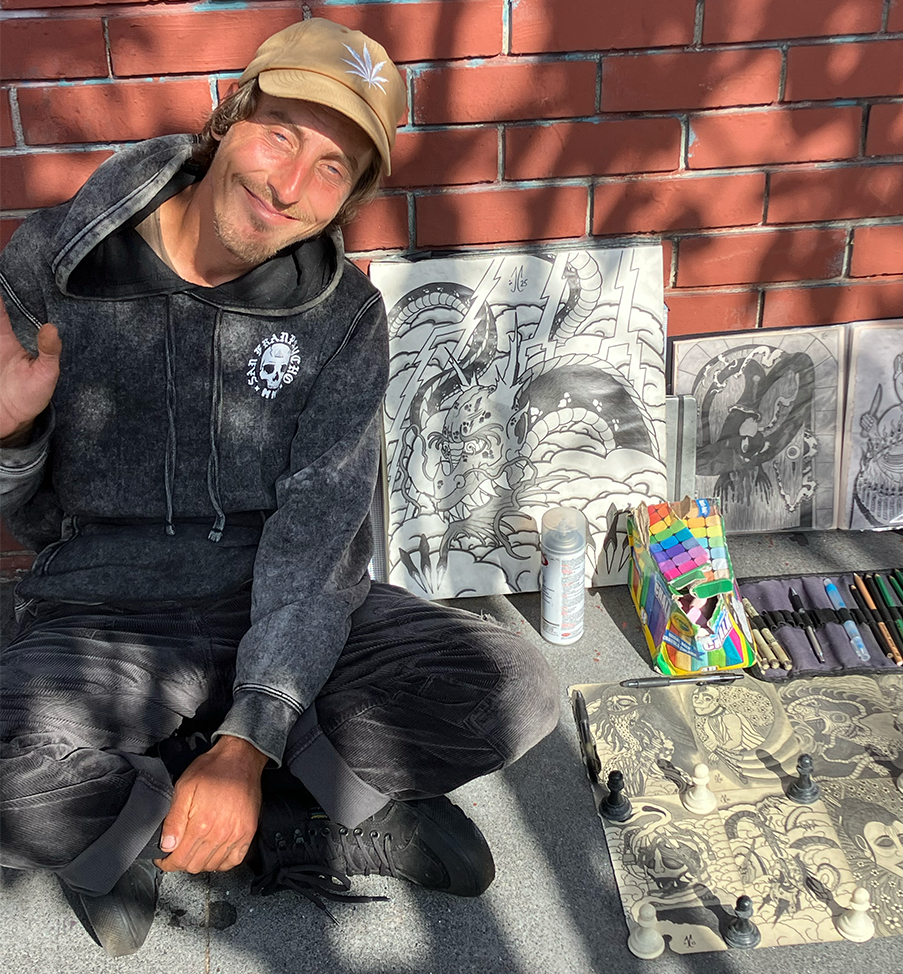
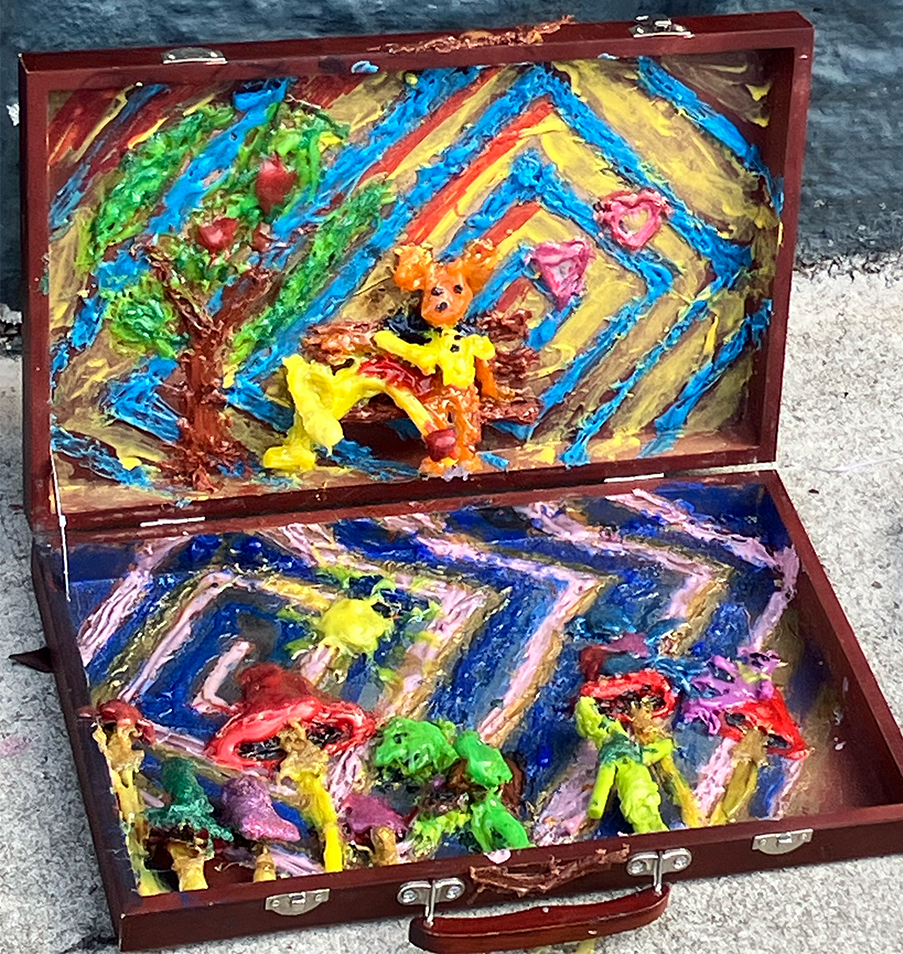
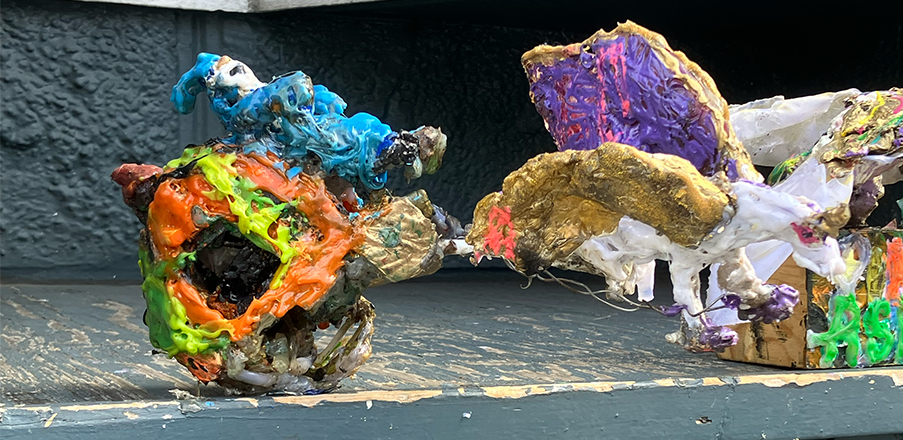
 Students often spot an array of black-and-white line drawings and vibrant hot glue sculptures as they walk along Haight Street during breaks, lunch and after school. Street artists create these art pieces as a means of healing and self-expression.
Jon Clark, a street artist who works near Haight Street Market, makes macabre Japanese-inspired drawings. “I spend between six to 10 hours a day, sometimes more, working on art,” Clark said in an interview with The Urban Legend. “I’m sitting right out here doing it every day.”
Artists often find inspiration from past experiences. “I had an experience where I overdosed, and I actually was dead for three days,” said Aaron, who only goes by his first name, in an interview with The Urban Legend.
Aaron is a street artist who makes and sells hot glue sculptures on the corner of Haight and Ashbury streets. “[When I overdosed], I had this vision that I was flying this unicorn on a pumpkin, like Cinderella, … and the only thing I believe in is that vision,” he said. He translated this experience into one of his sculptures.
Other artists use their work to articulate their thoughts. “I’m getting to express my internal thought processes a bit through art,” Clark said.
Because many see art as a tool for self-expression, it can play an important therapeutic role. “[Art helps] people … get reconnected to their creative spirit. And I think in terms of overall healing, … that is such an important thing to get connected to,” psychotherapist Sadie Robertson said in an interview with The Urban Legend.
Robertson conducts group art therapy sessions as a means to process trauma. “Part of what’s helpful about art therapy is that it’s a way to express things … that maybe someone doesn’t have the words to express,” she said.
Aaron emphasized how art has helped him heal. “I [use art to] distract myself from all the crap that I go through,” he said.
Artists can find validation through their art. “We live in a world where we are often expected to conform, but art allows you to express yourself,” art teacher Cherisse Alcantara said.
However, some street artists face external judgement. “I’ll get people walking by [who] don’t actually take the time to talk to me or look at my art. … They’ll just say, ‘Oh, you stole that,’ because they assume that there’s no way a poor person can learn how to do something well,” Clark said.
Artists must adjust to these challenges. “There’s always going to be some people that don’t appreciate your work, … [so] you have to get really comfortable with rejection,” art teacher Karen Rose said.
Many artists continue to pursue their passions and encourage teenagers to do the same. “I look at you kids … [and] each one of you guys are amazing,” Aaron said. “Each one of you has a purpose, and I don’t want you to ever forget that, because there’s something special about each one of us.”