


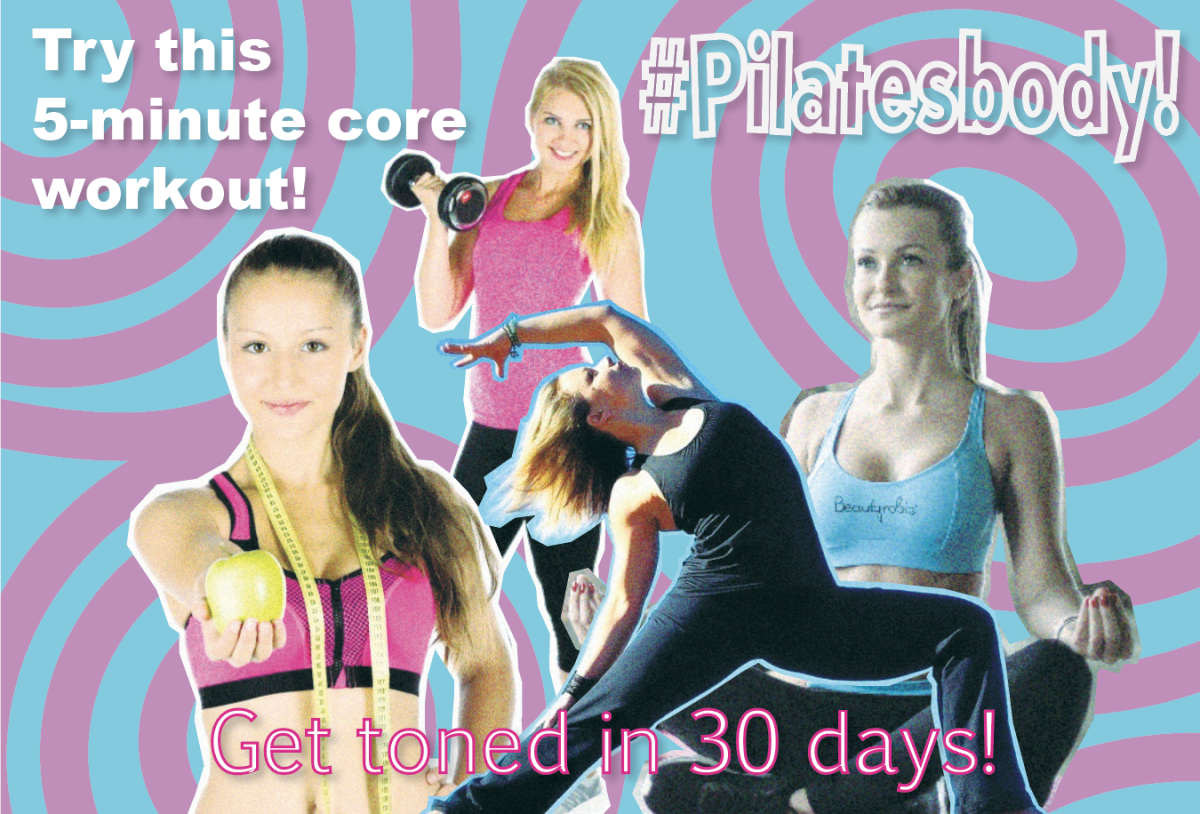
“Dieting is hard. Pilates is hard. Self control is hard. BUT, hating yourself is a million times harder,” wrote TikTok user @tonewithlola in a post from Aug. 14, 2025. On TikTok, hashtags like #wieiad (what I eat in a day) and #summerbody have gained more than 500,000 posts each — with top videos exclusively from women. Women’s fitness trends prioritize having a small and toned frame, reflecting and perpetuating an unattainable body standard that prioritizes thinness while neglecting women’s health.
Many popular fitness trends for women follow a pattern of toning and cardio-based workouts, largely ignoring strength training. “Whenever I see workouts on my feed, [they’re] … never workouts to get bigger, to get stronger. It’s more like workouts to get slimmer, [to] tone your body,” Emily Saunders ’28 said.
The benefits of strength training are substantial — it improves longevity, heart health, muscle maintenance, bone health and more. According to a 2023 Centers for Disease Control and Prevention (CDC) study, 64% of boys ages 14 to 18 reported doing three days of muscle-building exercise in the past week, compared to just 37% of girls.
Oftentimes, social media motivates women to exercise. A 2024 study from PubMed found that women who used Instagram had higher rates of body image concerns than women who didn’t. “[Social media] can make a lot of people feel bad about what they’re not doing and maybe think that they’re not doing enough when they hear what other people have to say about [exercise],” Emily Saunders ’28 said.
The widespread amount of health information on social media can make wellness more confusing and less accessible to beginners. “There’s so much information about dieting out in the world right now that not a lot of people know what works best,” athletic trainer Hannah Oyedeji said.
Fitness content on social media may be biased to support influencers’ personal monetary goals. “There’s lots of information on social media where people will tell you, ‘All you have to do is follow this one diet,’ or, ‘Buy my program to get fit,’” Thomas Scalise ’28 said.
Commercialized content can lead to influencers’ recommendations lacking scientific backing. A Harvard Health Publishing analysis of 100 popular fitness influencers on Instagram revealed that only half had credentials related to fitness or health.
The lack of nuance in online health content can cause women to follow fitness trends, but experience disillusionment when they don’t see similar results to what fitness influencers market on social media. “There’s not a lot of talk in the health sector about body composition specifically,” Oyedeji said. Body composition is one’s weight categorized into fat mass and lean mass. “People compare their bodies to those on social media, but the way ours are designed causes some to lose weight differently than others.”
Cultural narratives surrounding fitness often spread misinformation that potentially deter women from strength training. “I think girls steer away from strength training because they don’t want to look really bulky, even though that doesn’t realistically happen after working out once,” Katie Shannon ’27 said.
Despite this myth, the physical results of strength training are less noticeable in women than in men because testosterone expedites muscle growth. “I think it’s easier for male-identifying people to be more motivated to go to the gym because of all these different societal pressures,” Natalie Babler-Kuebler ’27 said. “But for women, [strength training] goes more unnoticed, because the aesthetics don’t show up [in the same way].”
Body standards can restrict young girls from exercising in the ways they enjoy. “I would encourage all students to … find what they like,” Director of Athletics Kali Heys said. “When you’re young, [it’s important] to try … a different variety of things. … You don’t have to work out in a way that is not enjoyable.”
While the media will always play a major role in teenagers’ lives, young girls should critically consider what fitness trends they follow and whether the advice comes from qualified sources. Exercise should be enjoyable and support girls’ health and internal confidence, not pressure them to meet unhealthy and unachievable body standards.