

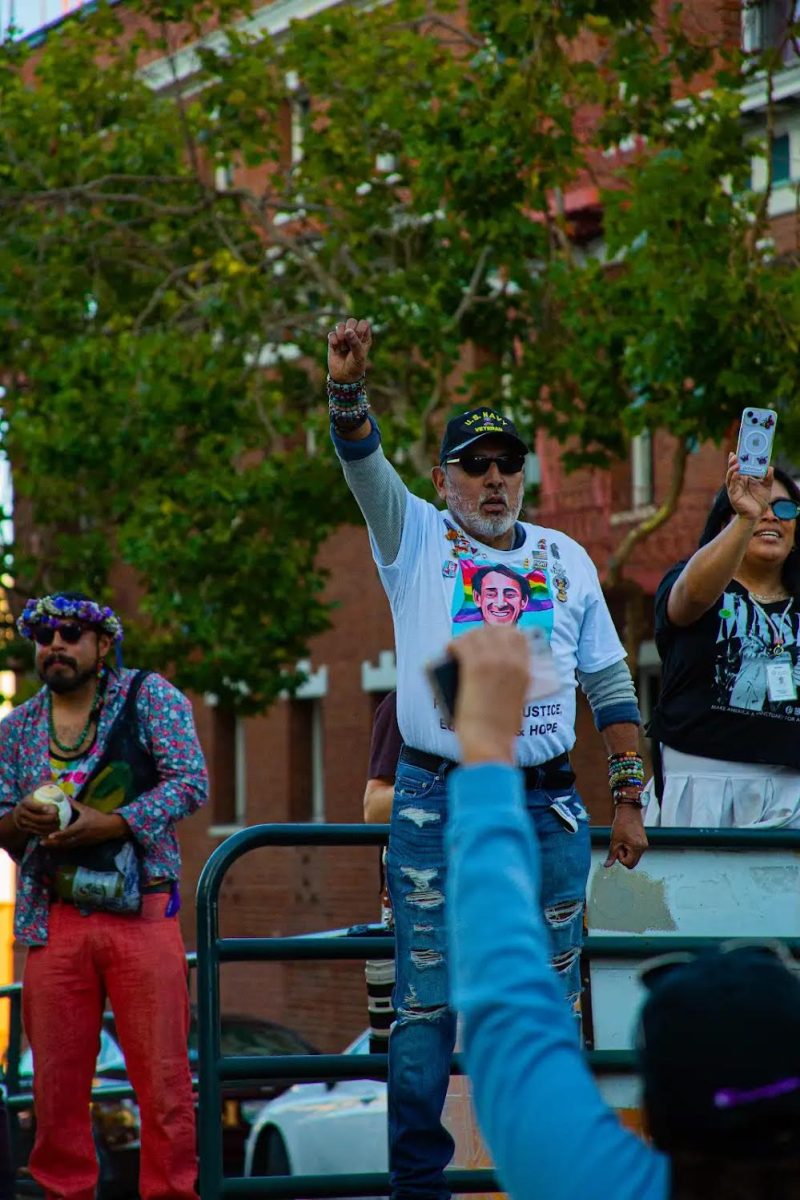
The first San Francisco Pride event, which happened on June 27, 1970, commemorated the one-year anniversary of the Stonewall riots. The day has long been a celebration of joy, queerness and resistance in the face of oppression, and eventually became pride, which is celebrated the entire month of June. In the 1970s, activists organized a short march followed by a picnic, which they dubbed a gay-in. This began the tradition of the San Francisco Pride parade, which drew an estimated 1 million attendees in 2025.
Since its inception, San Francisco Pride has grown to include a wide array of events, from museum exhibitions to drag shows to marches for identity. New this year is a Pride Party at the Asian Art Museum and the SoSF Pride Music Festival on Pier 80.
San Francisco Pride consistently draws participants from across the state, country and world, including former Santa Cruz resident and English teacher Lindsey Collins, who attended their first SF Pride in 2005. “It meant so much to see that all of Market Street had pride flags on it, and all of the month of June, it felt like something that the whole city was celebrating,” they said.
Some view widespread acceptance of queerness as the norm in San Francisco — but that has not always been the case. “San Francisco, … has a very long history of queer people and queer discrimination that isn’t often talked about,” Gender and Sexuality Alliance co-leader Rohan Notaney ’27 said.
In the 1960s, San Francisco queer and transgender patrons were often only allowed expression in underground clubs and bars, which were raided by police officers enforcing various penal codes criminalizing queerness. These police raids were often met with resistance through events like the Compton Cafeteria riot in the Tenderloin in 1966.
In the riot, a group of police officers harassed a group of diner patrons — mainly trans women and drag queens — which quickly spiraled into a brawl that spilled out into the street. “These ladies took bullets for us,” said Personna, a performer and queer rights activist in an interview with the Guardian. “Everyone in our community stands on their shoulders.”
This particular moment in queer history is recreated in an interactive theatre experience at the actual site of the riot, which is now a service site for Urban upperclassmen. “You eat yummy food, and you watch a reenactment — a drag show of this diner in the 1960s … and this riot that takes place. It’s funny, there’s music. But you [also] learn about history that not many people know about,” Notaney said. “[The Compton Cafeteria] riot … really helped queer people gain rights in San Francisco.”
Collins spoke about the joy they found in exercising their right to expression through SF Pride, especially in a hetronormative society. “There’s no amount of fitting-in that will ever protect us,” Collins said. “What I love about Pride is people are dressed in outrageous things, people are celebrating, they’re just taking up space in joyfulness.”