


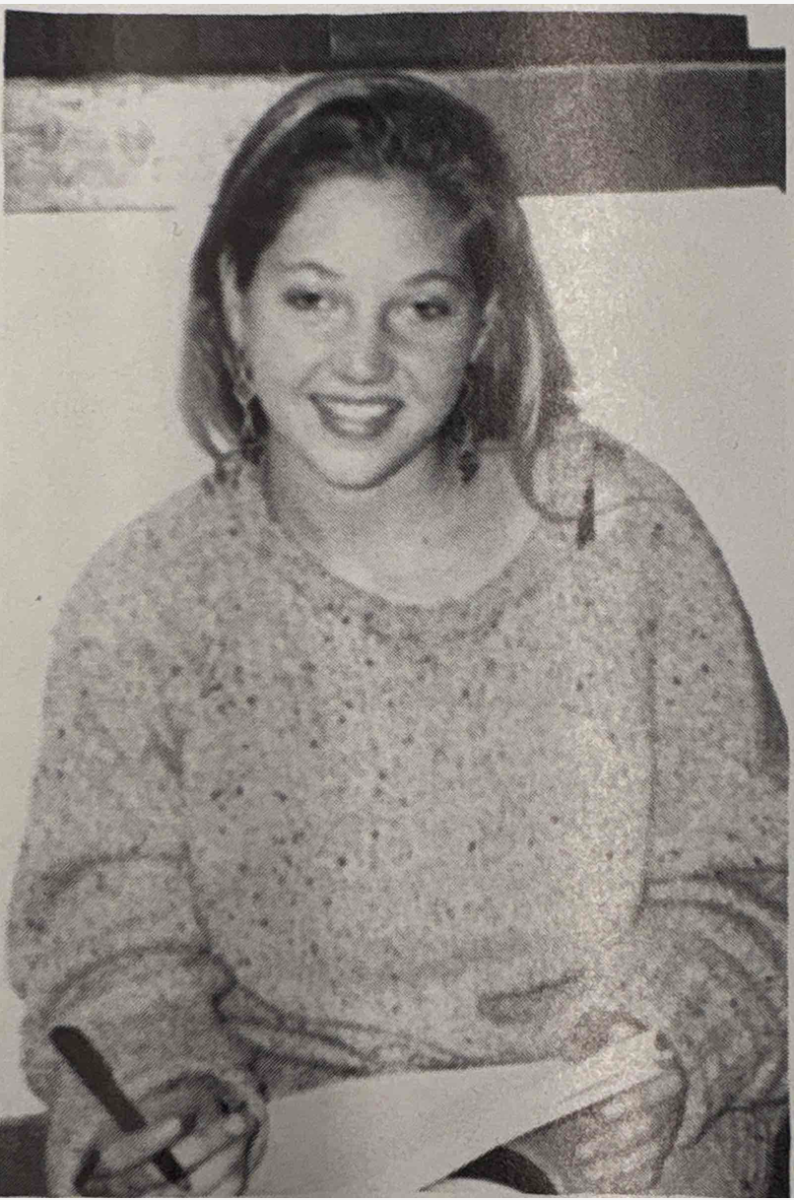
Maggie Nelson ’90 is an acclaimed writer, poet, critic and memoirist. After graduating from Urban, Nelson went on to write more than a dozen books, blending autobiography, philosophy, queer theory and cultural criticism. In her 2015 memoir, winner of the 2016 National Book Critics Award in Criticism, “The Argonauts,” Nelson explores gender, family, language and love.
Now a professor of English at the University of Southern California, Nelson lives with her family in Los Angeles. In this interview with The Urban Legend, Nelson reflected on her years at Urban, the process of writing “The Argonauts” and her evolving relationship with language.
What Urban experiences were most formative to your career or life?
“Gosh, Urban was so important to me. … There was just an endless collection of terrific teachers. The things that I read stayed with me; the encouragement that [my teachers] gave me in my writing stayed with me. It was an incredible time.”
Did you write creatively when you were at Urban? If not, when did writing become a form of art for you?
“I don’t have a lot of writing from high school. … My time at Urban was not really a big time of soul-baring poetry. I learned how to write about literature and about art … rather than more expressive creative writing. It wasn’t really until college that I started to write poetry more seriously. But I learned about it at Urban [by] writing papers.”
Do you think your relationship to language has shifted since you were in high school? Did you trust words more or less as a teenager compared to now?
“High school is a beautiful time, because … words are just infinitely exciting. You haven’t done that much with them as a writer, so you’re just learning what you can do. … I probably trusted [words] more [in high school]. I think that there was a more one-to-one relationship between how I felt and the words that I could express to hold [those feelings]. Now I’m more aware of how big life is and how it exceeds words.”
A big theme in “The Argonauts” is the idea of caregiving, and the paradox of caring for yourself while also caring for other people. Especially as teenagers, we are often caught between wanting independence and simultaneously relying heavily on our caregivers. Did you feel that tension growing up and how do you think about it now?
“Not everyone’s life is like this, … but ideally as a teenager, … it should be a pretty self-involved time. It’s a very beautiful, intense and not-always-happy time at all. There’s so much discovery, even if the discovery is of your suffering. … I’m very glad to have places where I can be in the world of caretaking, but I think that there’s always a kind of paradox, which is that we’re always sliding back between our needs and the needs of others. The good news is that that’s just the ethics of being a human.”
The insufficiency of binaries is a central theme in “The Argonauts.” Did you have early experiences — in identity, relationships or how you saw the world — that first got you to distrust/dislike binaries?
“Kids now are getting to grow up with this whole kind of elaborated discourse about non-binary in terms of gender. … [Being non-binary] was much more marginalized when I was growing up; … it existed as a lived experience, but it didn’t really exist in cultural language. … In ‘The Argonauts,’ I wanted to start off with a lot of discussion about language, and put gender into it, but also to indicate that gender is just one of many places where we can think about [binaries]. … Everywhere, it can be useful to think in terms of nuance. Not just nuance, but specificity — every human being presents a radical instance of individuality.”
In “The Argonauts,” you write about identity as something that’s always changing. Did you feel that sense of change when you were at Urban? How would you describe that?
“I don’t know if I had a clue of who I was or what was going on [in high school]. In my memory, I was just flying through experiences. … There was a lot of growing up really quickly. I don’t even think I knew which way was up — [but] not in a way I regret.”
Do you have any advice for current Urban students?
“We have these short lives … the hours of your days can be what you choose to do every minute; fill them with what you want your life to have in it. … And of course there’ll be crappy things you have to do, … but anyone who’s trying to make you think that you have to spend your life out of sync with your values [and] passions [is] wrong.”